


When Heat, Heavy Cars, and Aging Track Converge
- Summer 2026
- Cranemasters
For regional railroads, the greatest threat during the summer and fall may not be a derailment, a track buckling, or a bridge restriction. It may be the chain reaction that follows.
Risks
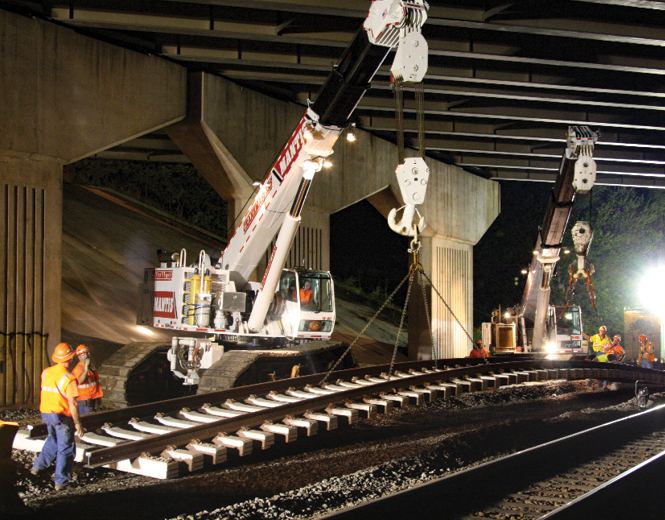
Railroads have always dealt with infrastructure challenges. Heat causes rail expansion. Heavy axle loads accelerate wear. Aging bridges require maintenance. Deferred capital projects eventually come due. None of these realities is new. What is changing is how quickly a localized infrastructure issue can cascade into a service problem that affects customers, operations, and revenue.
The most successful railroads increasingly view infrastructure reliability as a business-risk management strategy rather than simply a maintenance responsibility.
Consider a common summer scenario. A stretch of track develops elevated compressive stress during extreme heat. To reduce the risk of thermal buckling, the railroad imposes a slow order. The slow order adds transit time, affects crew utilization, disrupts switching schedules, and reduces network fluidity. A delay that begins with a few thousand feet of track can eventually affect customer loading schedules, equipment availability, and downstream deliveries.
Researchers studying the impact of extreme heat
on rail infrastructure have found that high temperatures can lead to track buckling, speed restrictions, operational delays, and increased maintenance costs.
“Extreme heat has been responsible for an average of 50 derailments annually over the past four decades in the United States.
(Jones, M. & Patel, R., 2021)
As temperatures continue to rise, railroads are expected to face increasing pressure to improve infrastructure resilience and operational reliability
Heat is only one piece of the equation.
Across North America, many regional railroads and industrial track owners are handling heavier freight traffic than their infrastructure was originally designed to accommodate. Increased car weights place greater demands on rail, ties, ballast, crossings, and bridge structures. While well-maintained infrastructure can safely accommodate these loads, deterioration accelerates when maintenance is deferred or when assets approach the end of their service lives.
The industry’s response is telling. According to Progressive Railroading’s 2026 Maintenance-of-Way Spending Report, many regional and short-line railroads are increasing infrastructure investments, with significant emphasis on continuous welded rail installation, rail replacement, tie programs, and other reliability-focused improvements. Genesee & Wyoming alone increased its infrastructure investment budget from $453 million in 2025 to $568 million in 2026, citing expanded continuous welded rail programs among its priorities. That investment reflects an important reality: railroads are not merely maintaining assets. They are protecting service reliability.
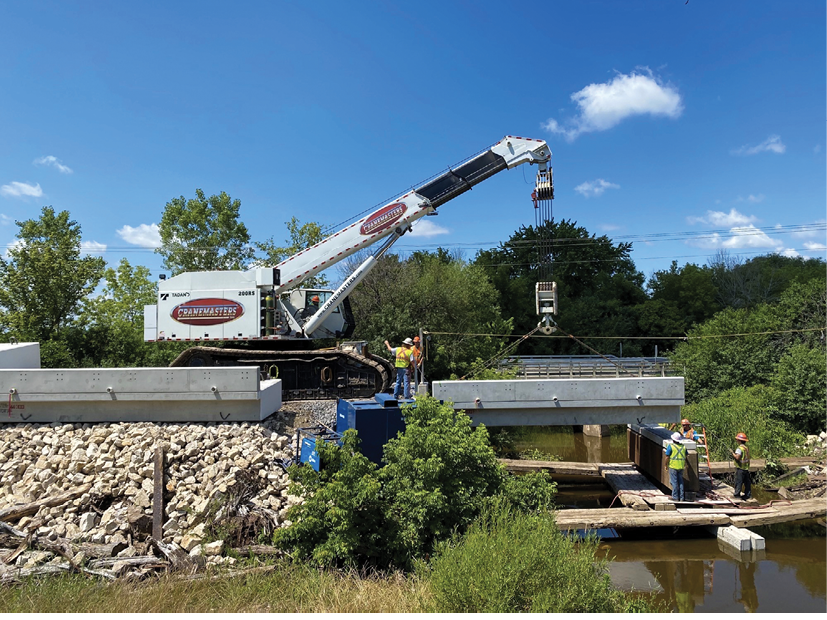
Industrial tracks often illustrate this principle most clearly
A customer-owned track may represent only a few thousand feet of track, but it frequently serves as the railroad’s direct connection to a shipper’s operation. A failed turnout, a deteriorated crossing, a drainage issue, or a localized derailment can prevent railcars from being loaded or unloaded. What appears to be a minor infrastructure issue quickly becomes a production problem, an inventory problem, and ultimately a customer relationship problem.
Bridge Issues
Bridge infrastructure creates similar vulnerabilities. Many railroad bridges continue to provide decades of reliable service, but aging structures require ongoing inspection, maintenance, and rehabilitation to support current traffic demands. Weight restrictions, deferred repairs, or unexpected structural issues can limit operational flexibility and create bottlenecks during periods of peak demand.
The lesson is straightforward: disruptions rarely remain isolated
Infrastructure specialists note that extreme heat can trigger cascading consequences that extend beyond track performance. Track defects, signal issues, speed restrictions, and infrastructure failures can cause delays that ripple through the network, affecting customers far from the original problem.
For shippers, the consequences are tangible. Delayed raw materials can interrupt production schedules. Missed switches can delay outbound shipments. Reduced service reliability can increase trucking costs and inventory requirements. In competitive markets, service disruptions can even influence future transportation decisions.
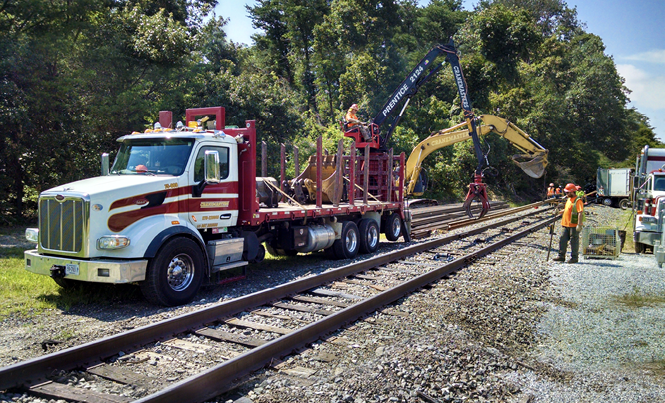
The stakes extend beyond repair costs
Reliability has become a competitive differentiator. Customers increasingly evaluate transportation providers based not only on rates, but also on consistency, responsiveness, and operational predictability. Infrastructure performance directly influences each of those measures.
Focus on Resilience
That’s why the strongest regional and industrial track operations are focusing on resilience. They are investing in track inspections, tie replacement programs, bridge assessments, drainage improvements, track evaluations, and strategic rehabilitation projects before failures occur. They recognize that preventing disruptions is almost always less expensive than recovering from them.
The summer and fall operating season will continue to test railroad infrastructure. Heat, weather, traffic demands, and aging assets are realities every railroad must manage.
The railroads that perform best will not necessarily be the ones with the newest infrastructure. They will be the ones who understand how small infrastructure problems become business problems and who act before the cascade begins.
References
Jones, M. & Patel, R. Thermal stress and railway infrastructure: the role of climate change. J. Railw. Eng. 12, 34–56 (2021), as cited by Janatabadi, M., Ortiz, D., & Ermagun, A. (2025). Extreme heat threatens railroads with connectivity and ridership losses. npj Urban Sustainability. Retrieved from https://www.nature.com/articles/s42949-025-00227-7
Progressive Railroading. (2026, April). Part 3: 2026 MOW Spending Report—Regionals/Short Lines. Retrieved from https://www.progressiverailroading.com/mow/news/Part-3-2026-MOW-Spending-Report-mdash-RegionalsShort-Lines–76698
Progressive Railroading. (2026, April). Part 1: 2026 MOW Spending Report. Retrieved from https://www.progressiverailroading.com/mow/news/Part-1-2026-MOW-Spending-Report–76695
STV. (2024). Extreme Heat and Rail Infrastructure: Building Resilience for the Future. Retrieved from https://stvinc.com/insight/extreme-heat-rail-infrastructure-resilience/
Mass Transit. (2025). Extreme Weather and Transit Rail: Managing Track Risk, Resilience and Reliability. Retrieved from https://www.masstransitmag.com/rail/infrastructure/article/55352777/extreme-weather-and-transit-rail-managing-track-risk-resilience-and-reliability