




The 2026 Workforce Demand
- Spring 2026
- Cranemasters
What Class 1, Regionals, and Industrial Track Operators Need to Know Now
Challenge
By 2026, the railroad workforce problem isn’t a “recruiting issue.” It’s an operating constraint—showing up as longer outage windows, deferred maintenance, slower restoration after storms/derailments, and less flexibility to add trains or protect intermodal commitments when the network gets tight. Surface Transportation Board (STB) Chairman Robert Primus has been blunt that inadequate employment levels are one of the reasons rail can’t capture growth opportunities (Lassen, 2025). The U.S. freight rail industry also faces an aging labor force, competition with other sectors for skilled labor, and difficulty attracting younger workers. (Chirls, 2025)
Meanwhile, employment counts continue to move in ways that worry operators and customers. Argus reported Class I U.S. employment at 120,399 in September 2024—down 1.7% year over year—despite continued demand in key commodity groups (Argus Media, 2024). And while the STB’s ongoing monthly employment dataset still tracks “maintenance of way and structures” as a dedicated group, that reporting is currently planned to end after December 2025 data is received—meaning railroads and suppliers may soon have less standardized visibility into workforce trends (Surface Transportation Board, n.d.).
The result: the battle for qualified laborers—people who can safely execute inspections, build-outs, tie/rail/surface programs, panel installs, crossing replacements, rerails, bridge span swaps, and emergency remediation—will intensify across Class I, regional, and industrial operators.
What follows is a field-focused, actionable playbook—grounded in current executive and regulator statements, and aligned to what actually works in track and terminal environments.
Demand Is Staying High—Even When Volumes Aren’t
Even in mixed freight environments, capital and MOW activity stays busy because the network still has to meet class, geometry, and service requirements. The Federal Railroad Administration’s (FRA) CRISI awards underscore that: in October 2024 the FRA announced 122 projects receiving more than $2.4 billion, with many grants directly funding infrastructure work and some are funding job training/apprenticeship and rail academy programs (Lassen, 2024).
That creates a structural reality for 2026:
- More funded projects + constrained track windows = more simultaneous work packages
- More severe weather events and higher consequence outages = more rapid-response needs
- A thinner bench of qualified labor = more schedule risk
Fatigue Is Real—and It Affects Retention
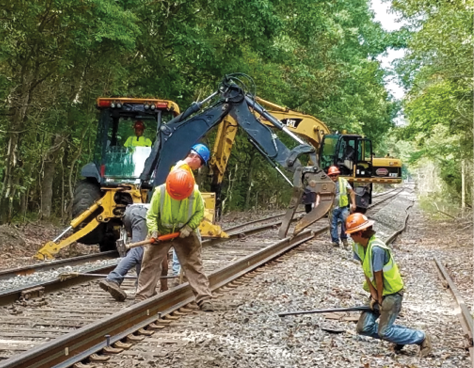
Norfolk Southern CEO Mark George described a workforce that was “fatigued,” and emphasized a leadership push to return to “normalcy” and “step it up a level” (Stephens, 2025). While those comments were broader than MOW alone, fatigue is often most visible in the traveling crews and outage-driven roles: people burn out when predictability, rest, and job control erode.
Operators Are Trying To Balance Headcount, Productivity, and Attrition—At The Same Time
In Norfolk Southern’s Q4 2025 earnings call, leadership noted the need to “continue hiring” trainees because of “a fair amount of attrition,” even while expecting net attrition and ongoing headcount efficiency (Motley Fool Transcribing, 2026).
For rail organizations, that tension is familiar: you can drive productivity with better planning and mechanization, but you still need qualified boots on ballast to execute safely and respond to the unexpected.
What’s actually driving the qualified labor shortage
The Work Is Specialized, Physical, and Compliance-Heavy
Rail labor isn’t generic construction. Railroads need people who can:
- Perform and document work to railroad and regulatory standards
- Execute under active railroad operating rules (job briefings, foul time protection, on-track safety)
- Use specialized equipment and methods (panel installs, rerailing systems, surfacing/tamping workflows, bridge picks, etc.)
- Work safely in time-constrained outages with live operations and multiple hazards nearby
That narrows the talent pool—and raises the cost of a bad hire.

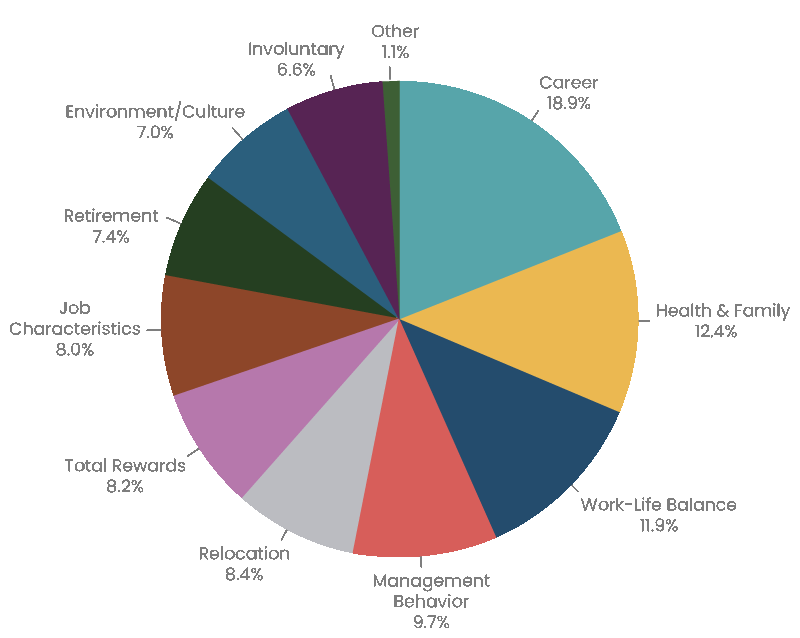
2025 Retention Report
Reasons for Leaving Overview
About the Survey
Between December 1, 2024, and January 15, 2025, Work Institute surveyed 88 HR and operational leaders to gain deeper insights into employee retention strategies and challenges. Participants included senior and mid-level HR professionals, as well as operational leaders from a wide range of industries, including healthcare, manufacturing, construction, transportation, and finance, among others.
Competition is not just other railroads—it’s anyone paying for skilled field labor
Utilities, heavy civil, pipeline, mining, ports, and industrial maintenance all recruit from the same practical skills base. When those jobs offer:
- More predictable schedules
- Less travel
- Comparable pay and benefits
…rail loses candidates.
Perception and awareness lag the reality of the work
Industry advocates continue to push the “rail is a good career” message (American Association of Railroads, 2024).
But for labor roles, the recruiting message has to be more specific than its a “good job.” Candidates want to know:
- Where they’ll work, how often they’ll travel, and how schedules are built
- What training looks like and how fast they can progress
- What good performance gets them
What high-performing track organizations are doing now
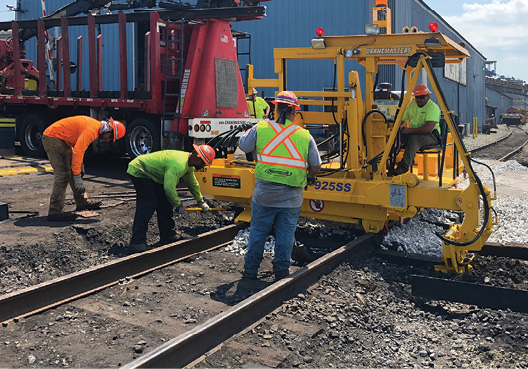
Rebuild the “deal” for field roles (schedule, travel, and predictability)
If you want to hire and keep laborers, your offer has to include operationally credible predictability within reason. Emergencies don’t follow a schedule.
Practical moves that work:
- Publish outage calendars 4–6 weeks out for planned work (even if you reserve “flex” windows)
- Use rotations that protect recovery time (e.g., consistent 8/6, 10/4 patterns where possible)
- Standardize travel policies (per diem, lodging, mileage, mobilization pay) so foremen aren’t improvising
- Build “no surprises” norms: start time, release time, and rest compliance are treated as production inputs—not afterthoughts
- Given the safety-sensitive and physically demanding nature of railroad work, contractors should establish reasonable, scheduled break and meal practices to reduce fatigue and protect worker health.
This directly attacks fatigue—the same dynamic NS leadership acknowledged at the enterprise level (Stephens, 2025).
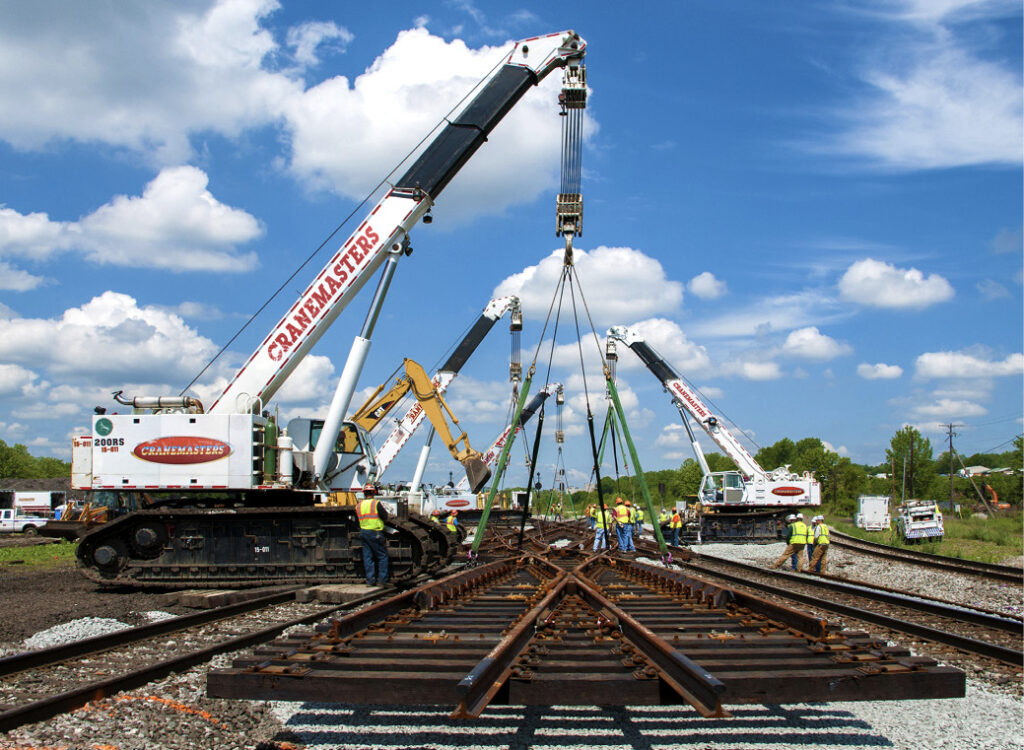
Treat foremen and supervisors as retention-critical roles
Most operators underestimate how much turnover is caused by the immediate supervisor. Broad retention research continues to flag management-related drivers as significant (Work Institute, 2025).
In track environments, that typically means:
- Poor job briefings and inconsistent work planning
- “Panic scheduling” with no look-ahead
- Inconsistent enforcement of safety and quality expectations
- Weak recognition and feedback loops
Field-proven actions:
- Make foreman development a formal program (planning, job brief leadership, coaching, production reporting)
- Trace foreman-level turnover and safety leading indicators (late job briefs, rework rates, near misses)
- Promote based on crew outcomes, not just individual technical skill
Shorten the time-to-competency with structured progression
Laborers stay when they can see the path.
How-to structure:
- Define a skills matrix tied to the work (inspection support, surfacing, welding support, panels, crossings, rerails, bridge picks, etc.)
- Pay for certifications and multi-skill capability (operators, CDL, specific equipment qualifications)
- Use “micro-credentials” so employees earn progress every 60–90 days, not only annually
Plan for surge capacity instead of burning out your core crews
When operators don’t have enough internal capacity to train at speed, Cranemasters can stabilize execution without sacrificing standards.
The Cranemasters model is most effective when it’s used for:
- Peak demand
capital blitzes, multi-division surfacing timeframe - Specialized work
complex track structures, bridge spans, rerails - Rapid response
storms, derailments, industrial incidents - Backlog elimination
crossing programs, tie programs, retarder upgrades, panel and complex diamond replacements
Cranemasters Fits the 2026 Workforce Dilemma
Qualified Crews, Purpose-Built Equipment, and Efficiency
When internal headcount is tight and time-to-competency is long, you can depend on Cranemasters to execute safely, quickly, and get the job done right.
- Track
For track repair, maintenance, and track construction, Cranemasters emphasizes experienced crews and “purpose-built equipment” to meet installation, repair, and maintenance needs (Cranemasters, n.d.-a). - Derailments
For emergency derailment response, Cranemasters provides 24/7/365 readiness, site assessment/risk mitigation, heavy-duty lifting, and rapid track and infrastructure repair to restore operations (Cranemasters, n.d.-b). - Innovation
Cranemasters highlights equipment and strategic systems aimed at improving efficiency and safety on high-consequence jobs like bridge span replacement, complex track installation/repair, and routine maintenance—reducing downtime (Cranemasters, n.d.-c).
More than a tactical contractor, Cranemasters is a STRATEGIC PARTNER
- Negotiate emergency response terms
Don’t wait for the call at 2 a.m. Define mobilization triggers, contacts, and authority levels during your annual planning. Cranemasters’ 24/7/365 emergency response supports this approach (Cranemasters, n.d.-b). - Package specialized projects into prescheduled work orders
Examples: large-panel installs, bridge span replacements, rerailing services, retarder installation work—so your internal forces stay focused on core inspections and cyclical programs. - Cranemasters is here to achieve your goals
The fastest way to lose track talent is chronic overtime and unpredictable callouts. Utilizing Cranemasters for surge capacity helps you protect schedules—and keep your best people.
Bottom Line for 2026 Workforce Challenges
The winners in 2026 will be the operators who apply production systems to workforce utilization:
- Predictable rosters + disciplined planning
- Foreman development as retention strategy
- Fast, visible progression for new hires
- Surge capacity partnership with Cranemasters to prevent burnout and protect service
STB leadership is already framing labor adequacy as a prerequisite for growth (Lassen, 2025). The question isn’t whether the industry needs more qualified labor. It’s whether each operator will build a workforce model that can actually deliver the track time, safety outcomes, and restoration speed that 2026 will demand.
Cranemasters is here to keep your rail operations on track.
References:
- American Association of Railroads. (2024, October). Rail Jobs Report 2024. https://www.aar.org/wp-content/uploads/2024/10/AAR-Rail-Jobs-Report-2024.pdf
- Argus Media. (2024, October 21). US railroad employment shrinks again. Argus Metals. https://www.argusmedia.com/metals-platform/newsandanalysis/article/2620453-US-railroad-employment-shrinks-again
- Cranemasters. (n.d.-a). Track repair, maintenance & construction. https://www.cranemasters.com/track-construction-and-repair/
- Cranemasters. (n.d.-b). Emergency derailment. https://www.cranemasters.com/emergency-derailment/
- Cranemasters. (n.d.-c). Rail services innovation. https://www.cranemasters.com/rail-services-innovation/
- Lassen, D. (2024, October 29). FRA awards $2.4 billion in CRISI grants to 122 projects (updated). Trains. https://www.trains.com/pro/maintenance-of-way/fra-awards-2-4-million-in-crisi-grants-to-122-projects/
- Lassen, D. (2025, January 16). STB chair remains concerned over Class I railroads’ lack of growth. Trains. https://www.trains.com/pro/freight/class-i/stb-chair-remains-concerned-over-class-i-railroads-lack-of-growth/
- Motley Fool Transcribing. (2026, January 29). Norfolk Southern (NSC) Q4 2025 earnings transcript. The Motley Fool. https://www.fool.com/earnings/call-transcripts/2026/01/29/norfolk-southern-nsc-q4-2025-earnings-transcript/
- Surface Transportation Board. (n.d.). Employment data. https://www.stb.gov/reports-data/economic-data/employment-data/
- Stephens, B. (2025, October 8). Norfolk Southern bounces back under CEO Mark George. Trains. https://www.trains.com/pro/freight/class-i/norfolk-southern-bounces-back-under-ceo-mark-george/
- Work Institute. (2025). 2025 retention report: Employee retention truths in today’s workplace. https://info.workinstitute.com/hubfs/2025%20Retention%20Report/2025%20Retention%20Report%20-%20Employee%20Retention%20Truths%20in%20Todays%20Workplace.pdf