




Mansfield, Connecticut Derailment
- Spring 2026
- Cranemasters
On the morning of February 5, 2026, at approximately 9:08 AM, a freight train traveling from Palmer, Massachusetts to Willimantic, Connecticut derailed near Stafford Road (Route 32) in Mansfield, adjacent to Eagleville Pond and the Willimantic River.
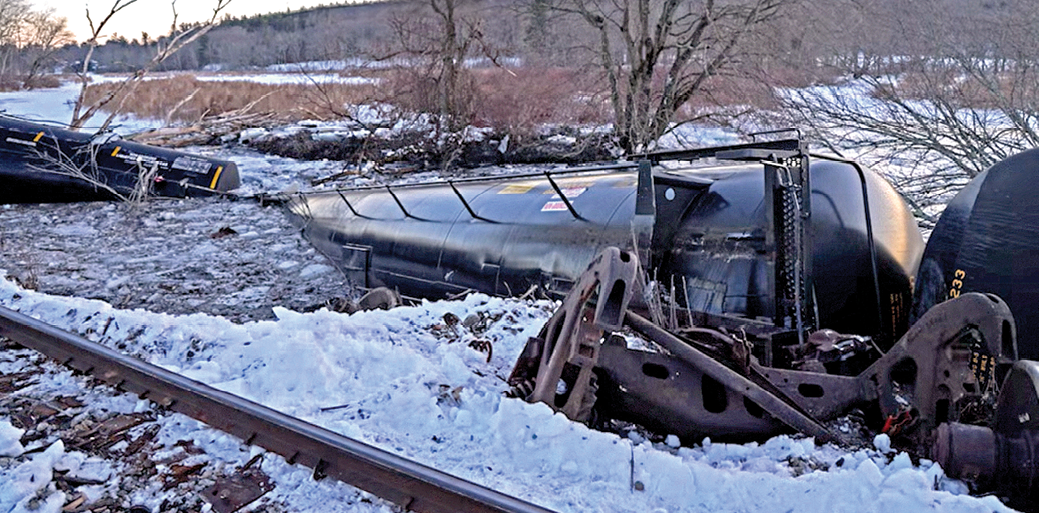
Photo courtesy of The Division of Emergency Management and Homeland Security onsite at the scene.
Challenge
The train consisted of approximately 41–43 cars, with 13 cars derailing, several of which overturned. Six of those cars carried liquefied petroleum gas (LPG), and multiple cars came to rest partially submerged in the waterway.
While no injuries were reported, the situation presented significant environmental and safety concerns. Authorities issued a shelter-in-place order within a half-mile radius due to the risk of a potential gas release, particularly because the LPG in this case was not odorized and required sensors to detect.
The physical conditions at the site made recovery especially difficult:
- Railcars were positioned on an embankment directly beside and in frozen water
- The marshy mud field on the other side was covered with over two feet of snow
- Wind chills reached as low as -19°F while snow fell and the crews worked
The sharp incline from the pond to the track bed, where most of the tankers lay on their side, meant that conventional rerailing equipment wouldn’t work. Additionally, the presence of pressurized LPG tankers required a carefully coordinated operation to eliminate any risk of tank failure or release.
Solution
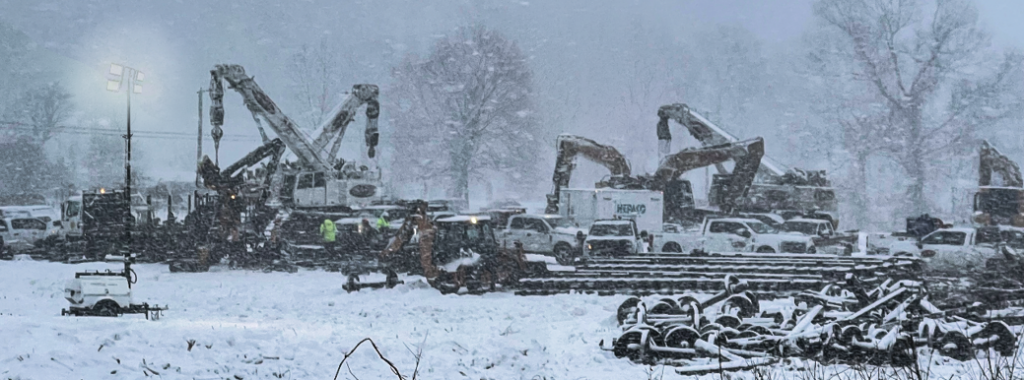
Due to the complexity and hazards involved, Cranemasters emergency-trained crews and purpose-built equipment were called in.
That meant the railroad’s personnel could continue their daily operations without getting pulled away to handle the derailment.
Cranemasters mobilized immediately. Under the direction of Senior Rerail Manager Buck Nolf, crews and equipment were dispatched from multiple divisions—including Candor, NC; Allentown, PA; and Taneytown, MD—demonstrating the company’s ability to respond rapidly across regions.
Equipment deployed included:
- Three Cranemasters 200 RS Super-Duty Cranes
- Three Excavators
- One 850 Bulldozer
- Tank Car Saver
- Fully equipped rigging trucks
Cranemasters Strategic Systems OperationTM
Upon arrival, Cranemasters worked closely with incident command, first responders, and environmental officials—including the Connecticut Department of Energy and Environmental Protection (DEEP)—to develop a unified recovery plan.
The execution required precise coordination. Crews operated in extreme cold while lifting 52-foot-long tank cars weighing in excess of 250,000 lbs each. Cranemasters carefully extracted railcars from icy water and unstable ground using 200 RS Super-Duty Cranes and specialized rigging.
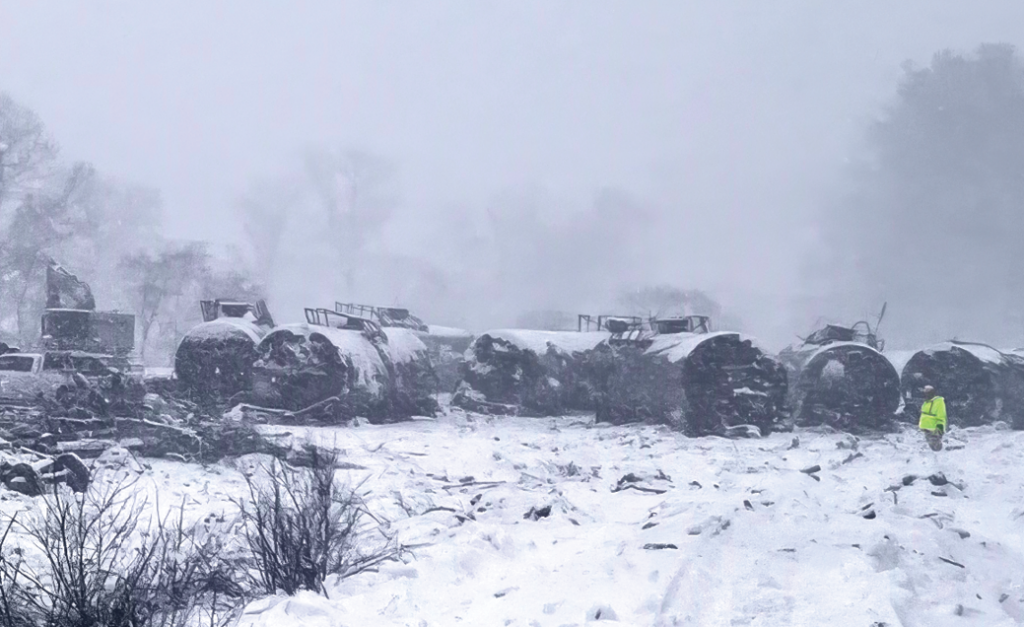
Recovered cars were relocated to a cleared section of the adjacent field, where they were set upright with controlled placement for safe access to allow transloading of the LPG into replacement tankers once the blizzard conditions eased.
This method minimized stress on tank shells and ensured no compromise to the integrity of the pressurized vessels. Despite harsh conditions, Cranemasters crews worked in coordinated shifts, maintaining continuous progress while prioritizing safety and environmental protection.
Result
Initial estimates from authorities suggested clearing the track could take three to four days or longer due to site conditions and the LPG cargo.
However, Cranemasters crews worked from 7:00 AM to 10:00 PM and safely lifted all derailed cars in one day—significantly ahead of expectations.
Key outcomes included:
- Zero injuries among the crews
- No LPG leaks or hazardous material releases
- Safe stabilization of all derailed railcars
- All derailed cars safely extracted before conditions worsened
Following the clearing operation, crews repaired damaged track infrastructure. The track was reopened after inspection and clearance by authorities.
Longer-term recovery operations, including transloading and controlled flaring of residual gas, would ensure complete remediation of the site.
Local officials noted that the incident “could have been a lot worse,” emphasizing how effective coordination and rapid response prevented environmental damage and protected the surrounding community.
Community response reflected those sentiments. Local residents and businesses expressed their appreciation to the crews—an acknowledgment of the professionalism, efficiency, and care taken throughout the operation.
Cranemasters expert crews and unique equipment–designed and built by Cranemasters–delivered a safe, efficient operation under some of the most challenging winter conditions possible.